Health Practitioners Who Recommend Premium Grounding
Health Practitioner Endorsed
Grounding is increasingly recommended by qualified health practitioners as a simple, non-invasive way to support sleep, stress regulation, and nervous system balance. Below are three practitioners who personally use and recommend Premium Grounding.

Dr. Heather Tynan
ND, DACM
Holistic Doctor · Naturopathic & Chinese Medicine
As a holistic doctor, grounding is a practice I regularly include in my patients' wellness plans. Connecting with the earth is a non-negotiable for optimal health — yet many of us don't have the time to be outdoors as often as we'd like.
Premium Grounding makes this essential practice accessible and effortless. I personally use both the grounding mat during the day and the grounding sheet at night, allowing me to experience the benefits of grounding around the clock.
I highly recommend Premium Grounding to my patients, family, and friends, and I'm deeply grateful for products that make such a powerful wellness tool more easily available.
Dr. Tynan's Daily Routine
She uses the grounding mat during the day and the grounding sheet at night — grounding around the clock.
More Practitioners Who Recommend Premium Grounding

Dr. Ericka Good
General Practitioner (GP)
I began using grounding as part of my commitment to improving sleep, and I was impressed by how it supported deeper, more restorative rest and helped calm my nervous system.
Shop what Dr. Good uses
Dr. Brittany Harness
Health Practitioner
Grounding is more than a wellness trend. Research suggests it can support healthy cortisol rhythms, reduce stress, and promote deeper, more restorative sleep. It's a simple, non-invasive way to help the body return to balance.
Shop grounding sheetsWhy Health Practitioners Recommend Grounding
Supports restorative sleep
Grounding may help support deeper, more restorative rest and calmer nervous system function overnight.
Supports stress regulation
Research suggests grounding may support healthy cortisol rhythms, helping the body return to balance.
Simple and non-invasive
Grounding products make the practice accessible every night — no pills, no devices, no routine to remember.
Backed by peer-reviewed research
Grounding has been studied in peer-reviewed journals for over two decades — including effects on cortisol, inflammation, and sleep.
Practitioners Say It. Customers Confirm It.
Our practitioners describe what they see in clinic. Our 1,000+ verified customer reviews describe what they experience at home.
Practitioner
"I was impressed by how it supported deeper, more restorative rest and helped calm my nervous system."
— Dr. Ericka Good, GP
Verified Customer
"Deeper sleep! Waking more rested, less inflammation! Get it, you won't regret it."
— Davida S. · ★★★★★
Practitioner
"Research suggests it can support healthy cortisol rhythms, reduce stress, and promote deeper, more restorative sleep."
— Dr. Brittany Harness
Verified Customer
"Ever since we started using Premium Grounding sheets, my sleep has improved, my stress levels and inflammation has decreased, and overall mood has been enhanced."
— Courtney F. · ★★★★★
Practitioner
"I personally use both the grounding mat during the day and the grounding sheet at night, allowing me to experience the benefits of grounding around the clock."
— Dr. Heather Tynan, ND, DACM
Verified Customer
"Bought queen bed mattress cover and grounding mats — fantastic product. Slept soundly from first night and really helps with any bone pain or muscular pain. Mats brilliant."
— Kathy, Sydney NSW · ★★★★★
The Research Practitioners Cite
Grounding has been studied in peer-reviewed journals for over two decades. A selection of papers commonly cited by practitioners:
Sleep & Cortisol
Ghaly & Teplitz (2004)
The effect of earthing on human physiology. Participants grounded during sleep showed normalised cortisol rhythms and reported better sleep and reduced pain.
Inflammation
Oschman, Chevalier & Brown (2015)
The effects of grounding (earthing) on inflammation, the immune response, and healing. Published in Journal of Inflammation Research.
Nervous System
Chevalier (2015)
The effect of grounding the human body on mood. Grounded participants reported improved mood and shifts toward parasympathetic nervous system activation.
Cardiovascular
Chevalier, Sinatra, Oschman & Delany (2013)
Earthing reduces blood viscosity — a major factor in cardiovascular health. Published in Journal of Alternative & Complementary Medicine.
Research is cited for context. Premium Grounding products are wellness tools, not medical devices.
Common Questions About Grounding
Why are doctors and naturopaths recommending grounding?
Grounding has moved from the wellness margins into mainstream practitioner recommendations. The shift is driven by two decades of peer-reviewed research on how physical contact with the earth may influence cortisol rhythms, inflammation markers, and nervous system regulation — alongside consistent patient-reported outcomes in clinic.
"Grounding is more than a wellness trend. It's a simple, non-invasive way to help the body return to balance." — Dr. Brittany Harness
How does grounding help with sleep?
Multiple small studies (Ghaly & Teplitz 2004; Chevalier et al.) have reported improvements in sleep quality, overnight cortisol normalisation, and shifts toward parasympathetic — or "rest and digest" — nervous system activation in grounded participants. Customers and practitioners commonly describe deeper, more restorative rest within the first few weeks.
"I was impressed by how it supported deeper, more restorative rest and helped calm my nervous system." — Dr. Ericka Good, GP
Can you ground during the day as well as at night?
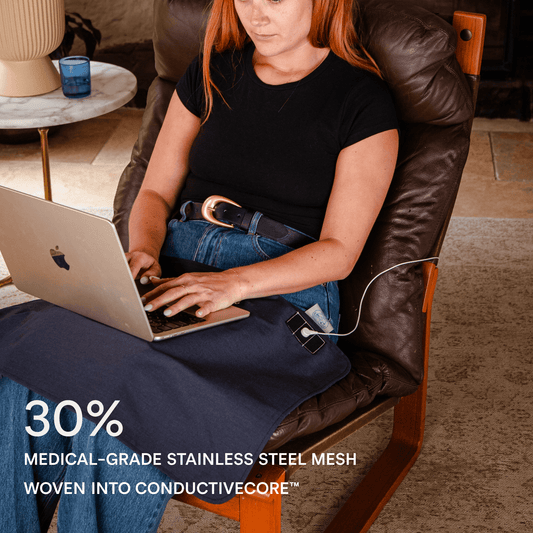
Yes. Many practitioners recommend a "grounded routine" — a mat at the desk, couch, or under the feet during the day, paired with a grounding sheet on the bed at night. This provides near-continuous contact with the earth's electrical charge, which is difficult to achieve in modern indoor life.
"I personally use both the grounding mat during the day and the grounding sheet at night, allowing me to experience the benefits of grounding around the clock." — Dr. Heather Tynan, ND, DACM
How long before I notice a difference?
Most customers report noticing changes to sleep quality within the first one to three weeks of consistent nightly use. Stress and recovery benefits often build gradually over four to eight weeks. Premium Grounding offers a 120-night trial so you can assess your own response with no financial commitment.
Who is grounding NOT suitable for?
Grounding is generally suitable for adults and children. However, anyone taking blood-thinning medication, using a pacemaker, or being treated for thyroid conditions should speak with their doctor before starting grounding, as physiological changes may affect medication dosing. Always consult a qualified health professional regarding any health concerns.
What makes Premium Grounding different?
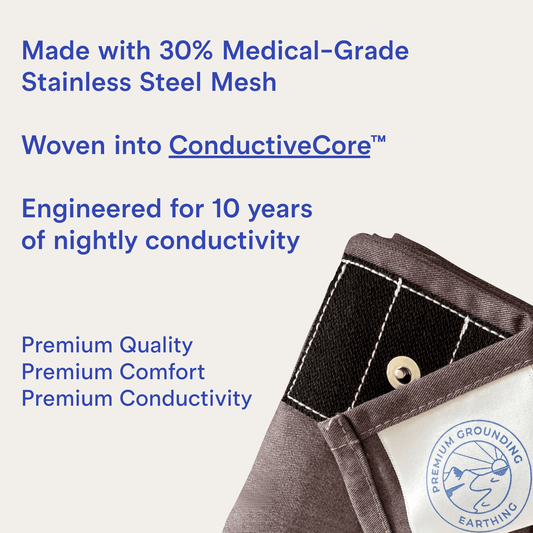
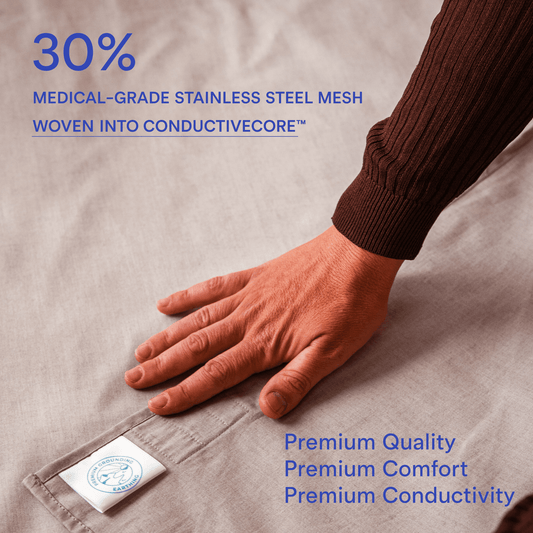
Premium Grounding uses medical-grade stainless steel fibres woven through every sheet and mat, tested for conductivity before shipping. Every product is backed by a 120-night trial and comes with access to a free socket tester and multimeter (sold separately) to verify a proper earth connection in your home.
"Premium Grounding makes this essential practice accessible and effortless." — Dr. Heather Tynan, ND, DACM
Bring grounding into your daily routine
Join thousands of customers — and the practitioners above — who are using Premium Grounding to support better sleep, lower stress, and overall wellbeing. Try it for 120 nights.
Disclaimer: Quotes are shared with permission. Statements by health practitioners reflect their personal experience and professional perspective and are not medical advice. Premium Grounding products are wellness tools, not medical devices, and are not intended to diagnose, treat, cure, or prevent any disease. Research is cited for context only. Always consult a qualified health professional regarding any health concerns.
Premium Grounding Products
-
Premium Grounding Sheets
Regular price From $249.00 AUDRegular price -
Multi-Purpose Grounding Pad
Regular price From $159.00 AUDRegular price$209.00 AUDSale price From $159.00 AUDSale -
Premium Grounding Mat
Regular price $129.00 AUDRegular price$0.00 AUDSale price $129.00 AUD -
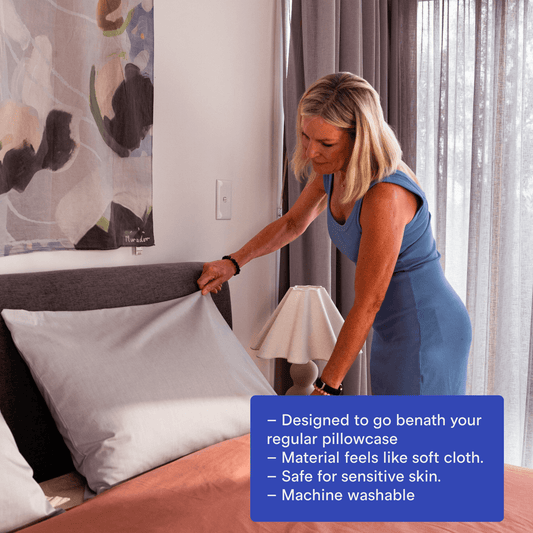
Earthing Grounding Pillowcase
Regular price From $129.00 AUDRegular price$0.00 AUDSale price From $129.00 AUD -
Earthing & Grounding Mat
Regular price $109.00 AUDRegular price$0.00 AUDSale price $109.00 AUD -
Pet Grounding Mat
Regular price $129.00 AUDRegular price$0.00 AUDSale price $129.00 AUD -
Grounding Mouse Pad
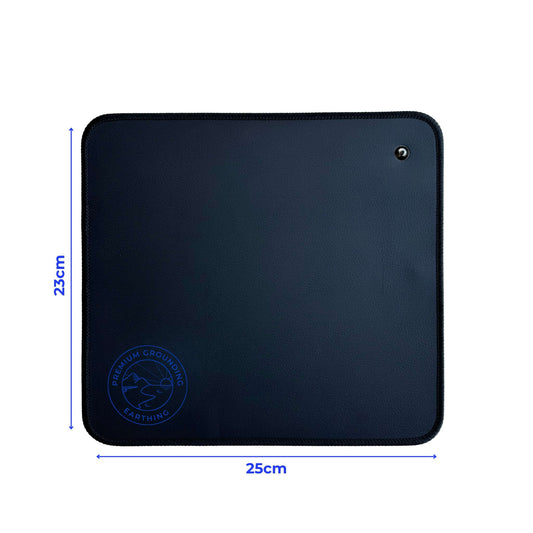
Regular price $79.00 AUDRegular price$0.00 AUDSale price $79.00 AUD -
Mulberry Silk Sleep Mask
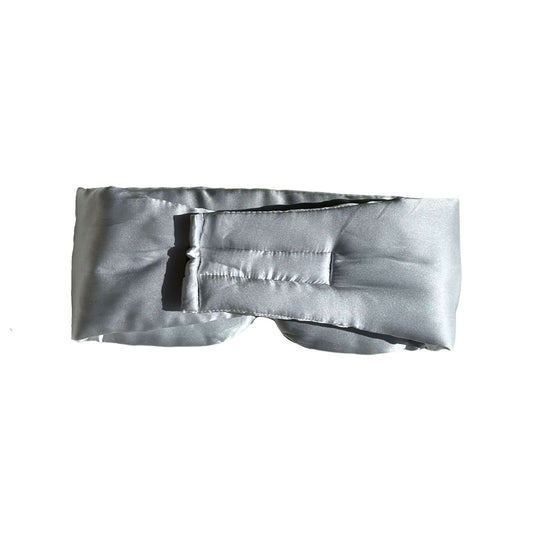
Regular price $79.00 AUDRegular price